

Reviewed by IMPS Editorial Team · Last reviewed
A patient in India brings home antidepressants, and the family calls every psychiatric prescription habit-forming. A relative fears that starting care means taking pills for life. That fear can delay help or lead people to stop treatment without support.
Psychiatric medicines have different benefits and risks. A daily medicine and a short-term sedative do not share the same risks. Each name on a prescription needs its own discussion.
Physical dependence is the body’s adaptation to a medicine. It can cause withdrawal symptoms when its dose is reduced or stopped. Knowing the difference helps patients make safer health choices.
For mental health crisis support in India, Tele-MANAS is available at 14416. Immediate danger needs emergency help through 112.
Key Takeaways
- Medicine names matter more than broad labels.
- Withdrawal alone does not prove addiction.
- Long treatment can serve a clear purpose.
- Side effects deserve review.
- Dose changes need clinical guidance.
The specific question is: are antidepressants addictive?
Are Antidepressants Addictive?
No, commonly prescribed oral antidepressants are not considered addictive. They do not typically cause intoxication, cravings, or compulsive reward-seeking. Their usual benefit is relief from symptoms, not a drug-induced high.
Addiction involves impaired control and continued use despite harm. Needing effective treatment does not meet that definition. Neither a long treatment course nor a prescribed dose change establishes addiction.
Needing effective treatment does not, by itself, mean addiction.
A patient may sleep better, feel less distressed, or return to work as treatment helps. Those gains differ from taking a drug for intoxication. Feeling better does not show that someone has developed compulsive use.
Physical dependence can still occur during ordinary prescribed use. That adaptation differs from addiction, even when stopping causes discomfort. A patient can follow every instruction and still need help reducing a dose.
Uncommon misuse does occur, including alongside other substance use. A clinical literature review found little clinically significant addiction risk for most medicines in this group. Rare reports do not describe the usual course of treatment.
Taking extra medication or using it nonmedically still needs clinical assessment. The prescriber needs to know what happened, without blame. Understanding what antidepressants do makes this distinction less mysterious.
Are SSRIs Addictive, and How Do Antidepressants Work?
SSRI stands for selective serotonin reuptake inhibitor, a medicine that changes serotonin signaling to help treat symptoms. SSRIs support treatment rather than produce a high. They are not considered addictive in ordinary prescribed use.
The plural name is selective serotonin reuptake inhibitors. Serotonin is one of the brain’s chemical messengers, called neurotransmitters. Depression involves more than a simple shortage of this one chemical.
Are Antidepressants Drugs?
Yes, antidepressants are drugs; the word includes medicines used for health care. It does not mean illegal substances or narcotics. Reading “drug” on a label says nothing by itself about addiction.
Different classes act on chemical signaling in different ways. Reuptake means a nerve cell takes a released messenger back up. Blocking that process changes how long the messenger remains available between cells.
| Class | Main action | Generic example |
|---|---|---|
| SSRIs | Affect serotonin reuptake | Fluoxetine |
| SNRIs | Affect serotonin and norepinephrine reuptake | Duloxetine |
| Tricyclic antidepressants | Affect reuptake and other receptors | Amitriptyline |
| MAOIs | Reduce neurotransmitter breakdown | Phenelzine |
| Atypical antidepressants | Mechanisms vary | Mirtazapine |
SNRIs act on serotonin and norepinephrine, another chemical messenger. MAOIs block an enzyme that breaks down certain neurotransmitters. Changes in these signals are not the same as compulsive reward-seeking.
Are Antidepressants Effective?
Yes, these medicines can ease symptoms, though response varies between patients. They can treat depression, anxiety disorders, OCD, PTSD, and selected pain conditions. OCD involves unwanted thoughts and repeated acts; PTSD can follow trauma.
Noticeable benefit commonly takes 4-8 weeks. Sleep or energy may improve before mood does. Several days without clear relief do not establish that the medication has failed.
The prescriber weighs symptoms, side effects, interactions, and other health conditions when choosing treatment. Psychotherapy can work alongside medicine to address distress and daily problems. Some patients need a different treatment when the first choice does not help enough.
Improvement may mean fewer symptoms and better daily function, not feeling cheerful all the time. Follow-up helps track those changes. A medicine can help without being addictive, yet stopping it can still cause symptoms.
Antidepressant Addiction Symptoms or Withdrawal?
Dizziness and odd head sensations after a dose reduction may reflect withdrawal, not addiction. What people call antidepressant addiction symptoms may instead reflect the body’s response to less medication. Symptoms after stopping do not, by themselves, prove compulsive use.
The clinical name for antidepressant withdrawal is antidepressant discontinuation syndrome. It can follow abrupt stopping or a substantial dose reduction. A missed dose can also trigger symptoms in some patients.
| Pattern | Defining feature | Clinical implication |
|---|---|---|
| Addiction | Loss of control and continued use despite harm | Assess compulsive use |
| Physical dependence | Adaptation with possible withdrawal after reduction | Review the dose-reduction plan |
| Relapse | Return of the original depression or anxiety | Reassess the underlying condition |
Possible withdrawal symptoms include changes in balance, sleep, and mood. Some feel unlike the original illness. Others overlap with distress that the patient has felt before.
- Dizziness
- Nausea or flu-like discomfort
- Insomnia or vivid dreams
- Anxiety or irritability
- Brief electric-shock sensations, sometimes called brain zaps
Risk and severity vary with the medicine, dose, treatment duration, reduction speed, and individual response. Withdrawal is not always mild or brief. Some patients have symptoms that seriously disrupt daily life.
Timing and symptom patterns offer clues, but they cannot reliably settle the diagnosis alone. Withdrawal can resemble relapse or occur alongside it. The prescriber needs the dose history and the patient’s account of what changed.
Antidepressants also carry risks unrelated to dose reduction. Withdrawal discomfort and medication safety need separate attention.
Are Antidepressants Dangerous?
Being nonaddictive does not mean being free of adverse effects. Antidepressants can help, but supervised treatment must weigh benefit against each patient’s risks. A serious reaction should not wait for the next routine appointment.
Common side effects include nausea, dry mouth, sleep changes, dizziness, sexual difficulties, and weight changes. Some ease with time; others persist and need review. Their impact on daily life matters when weighing treatment choices.

Some younger people develop increased suicidal thoughts or behavior, especially early in treatment or after dose changes. Patients and agreed support people should take new changes seriously. Clear action plans help separate routine concerns from urgent danger.
- Persistent or troublesome adverse effects need a prescriber review.
- Unusual activation with very little sleep needs prompt assessment.
- New suicidal thoughts need urgent help; immediate danger needs emergency care.
- Suspected overdose, or fever with confusion and rigidity, needs emergency assessment.
Rare serotonin syndrome can cause fever, confusion, stiff muscles, or seizures. Overdose can threaten life, particularly with tricyclic antidepressants. These risks differ from addiction and need their own safeguards.
SSRIs can raise gut bleeding risk, especially with NSAID pain relievers such as ibuprofen. Treatment can also affect sodium levels or trigger mania or hypomania in susceptible patients. These are states of unusually raised or irritable mood.
Interaction checks should cover pain relievers, other psychiatric medicines, and supplements. Safety needs ongoing review, not automatic stopping when improvement starts.
Are Antidepressants Permanent?
Some courses end, while others appropriately continue for years. Antidepressants do not automatically mean lifelong treatment. Many patients continue for at least six months after improvement.
That continuation period starts after improvement, not automatically with the first tablet. Early relief does not mean recovery is secure. Feeling better may show that the medication is still helping.
A first episode that stays stable may lead to a discussion about stopping. Repeated severe episodes may support longer maintenance treatment. Neither pattern gives every patient a guaranteed stopping date.
Persistent depression can also require ongoing care. Clinicians weigh past episodes, relapse risk, response, and patient preferences. A need for continued treatment is not evidence of addiction.
Recovery includes daily function and lasting stability, not just a brief lift in mood. Returning to work, study, meals, and relationships can help show progress. The patient’s own goals belong in that review.
Some patients can stop after a planned course; others benefit from continued use. The decision should reflect the person’s history, not pressure to prove they need nothing. Regular reviews create time to discuss changing needs.
In India, access and follow-up plans help make either choice safer. Refill arrangements matter before any planned reduction begins.
Safe Psychiatric Medication Use in India
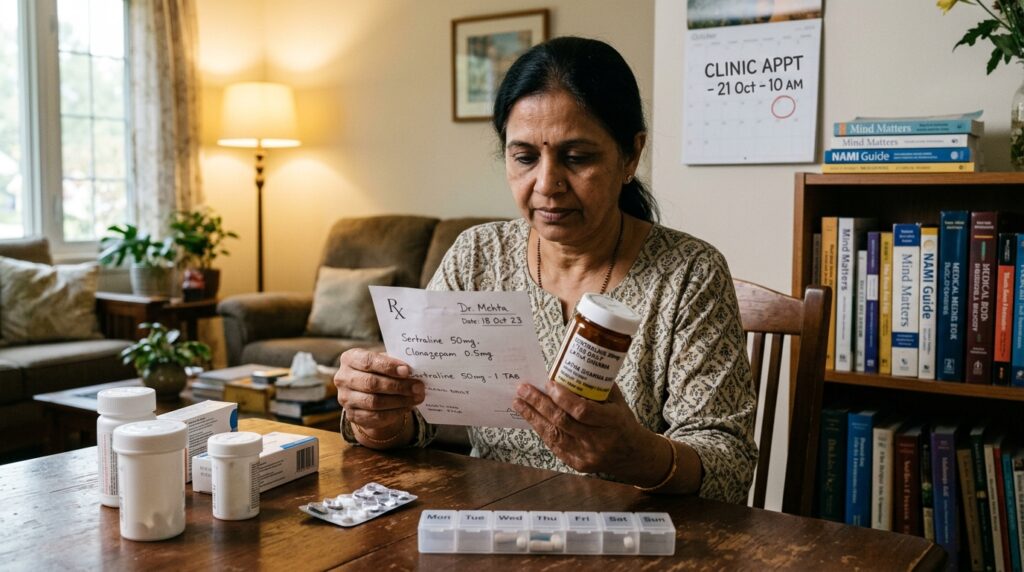
A patient with two tablets left and a later appointment needs a refill plan, not a gap. Safe medication use includes keeping access steady between reviews. Stopping abruptly or independently doubling a missed dose is unsafe.
A refill delay can arise from cost, travel, or an unavailable formulation. Contacting the clinic before the supply ends gives time to address it. A missed dose needs medicine-specific advice rather than guesswork.
Are Antidepressants Expensive?
Costs vary by medicine, strength, formulation, brand or generic version, and dispensing setting. Follow-up visits and psychotherapy can add to the total. The tablet price alone does not capture the full cost of care.
An affordable generic or suitable formulation may help maintain access. The prescriber and pharmacist can discuss options that fit the prescription. Running out because one brand is unavailable can cause an avoidable break.
Patients should raise cost problems while some tablets remain. A clear medicine record helps the pharmacist identify the prescribed product. A lower-cost option still needs to match the intended medicine and form.
Planning Follow-ups and a Gradual Taper
Tapering means a gradual, clinician-guided dose reduction. It often takes weeks or months, and sometimes longer. The pace depends on the medicine, treatment duration, and response to each reduction.
- Bring all medicine strips and supplements.
- Confirm each medicine’s generic name and purpose.
- Discuss benefit and troublesome effects.
- Agree on an individualized taper and what to do if symptoms appear.
- Arrange the next review and enough supply until then.
Tablets with different formulations are not automatically interchangeable during tapering. Some forms should not be split. A pharmacist can explain how the prescribed form releases its dose.
Withdrawal may mean the clinician needs to slow or revise the plan. Patients should report changes before making further reductions themselves. Family support can help with visits or records when the patient agrees.
A trusted relative should join discussions only with the patient’s agreement. A clear record keeps each medicine’s purpose visible. That record and a follow-up plan help counter broad family myths about psychiatric treatment.
Common Myths About Psychiatric Medicines in India
Fluoxetine and clonazepam on one prescription have different risks. The myth that all psychiatric drugs are alike can lead to unsafe changes. Medicines prescribed together can have different stopping rules.
Medicines on the same prescription can have different stopping rules.
Benzodiazepines such as alprazolam and clonazepam can cause physical dependence and carry misuse and addiction risks. Clinicians may prescribe them for anxiety or insomnia. Stopping regular use abruptly can cause dangerous withdrawal.
An antidepressant prescribed for anxiety does not become a sedative because of that diagnosis. Antipsychotics and mood stabilizers are generally not considered addictive. They still have their own adverse effects and monitoring needs.
The myth that needing medicine shows weak character confuses illness with willpower. Mental health disorders can disrupt sleep, work, and relationships. Treatment aims to improve function, not judge personal strength.
Patients may still need help even when they try hard to cope. A useful plan responds to symptoms and daily needs. Shame can make an honest discussion about medications harder.
The myth that therapy or family support makes medication unnecessary creates another false choice. Treatment for anxiety and depression can combine these forms of care. Some patients need medicine, while others may follow a different plan.
No approach promises a cure for everyone. Recovery calls for choices that fit the patient. Decisions should concern the exact medicines, rather than fear or stigma about psychiatric treatment.
Conclusion
A treatment plan should fit the patient and the exact medicine. Continuing or stopping needs an individual clinical decision, not a test of willpower. One broad claim about psychiatric medicines should not trigger changes to an entire prescription.
Recovery includes daily function, lasting stability, and a plan the patient can follow. Concerns about benefit, cost, or unwanted effects deserve a clear discussion. Those concerns can guide a review without forcing a sudden change.
Withdrawal alone is not proof of addiction, and medication changes need clinical guidance. The next step is concrete: bring the prescription and current concerns to the next prescriber review.