
Reviewed by IMPS Editorial Team · Last reviewed
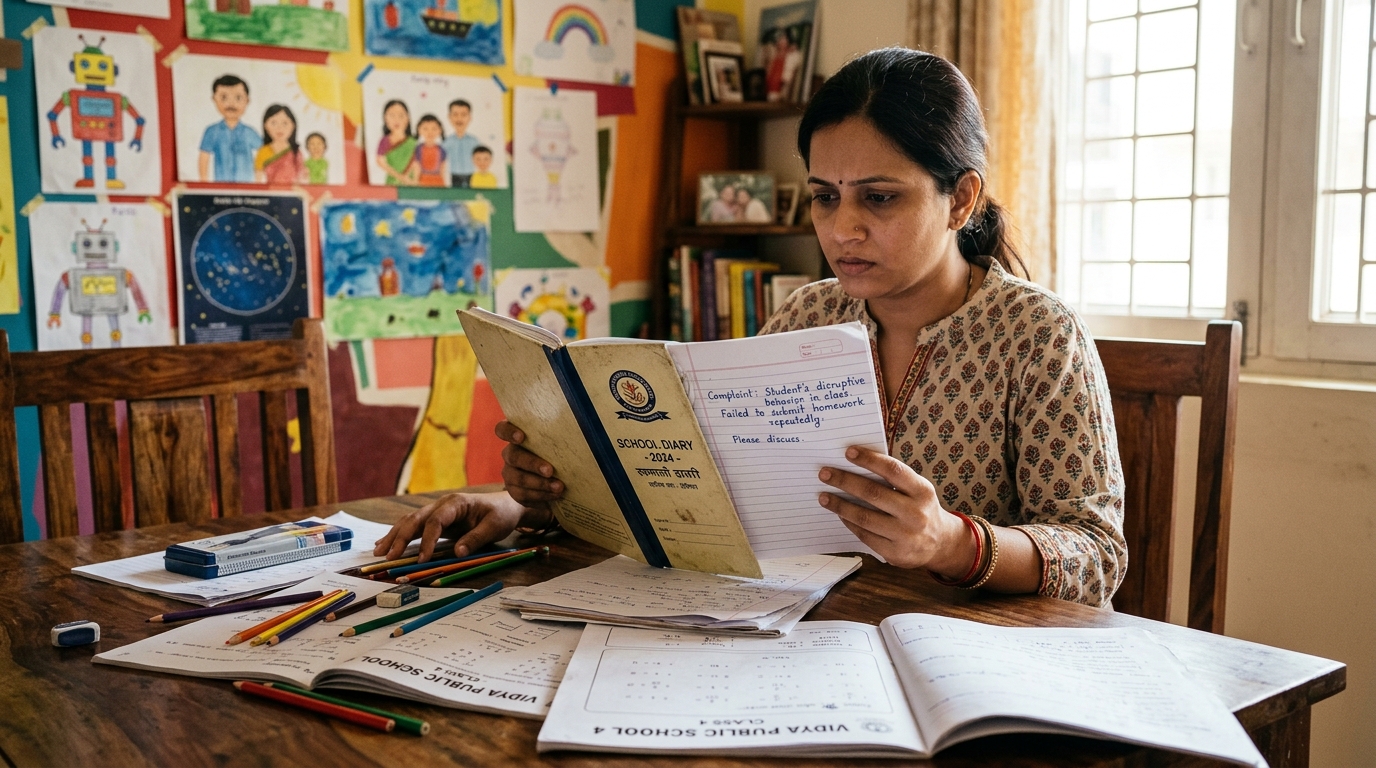
For the third time this month, a parent opens the school diary to the same complaint and wonders whether ADHD in children looks like this. The note says the child will not sit still. At home, homework stretches to three hours, and the water bottle goes missing every single week. The parent is tired, worried and unsure whom to believe.
Many people in India still treat child mental health as a taboo, so a parent reading about it is already ahead. A parent who can tell real signs from everyday restlessness saves months. So does one who can answer the myths relatives repeat and name the right professional for an assessment.
One detail matters before any list of signs. A child who struggles only at school but does well at home and with friends may have a different problem altogether. That is why telling the difference deserves real time. Life with a restless child is not proof of a disorder, and the first step is seeing what ADHD actually does inside a child’s brain.
Key Takeaways
- ADHD is a brain-based neurodevelopmental disorder, not a result of weak discipline or bad parenting.
- Signs count only as a pattern lasting six months or more, in at least two settings, that disrupts learning or family life.
- Girls tend to show the quiet, inattentive form and are often assessed years later than boys.
- No blood test or scan diagnoses ADHD; the assessment is built from history, rating scales and observation.
- In India the pediatrician is the first stop, followed by a child psychiatrist or developmental pediatrician and a clinical psychologist.
- Behavior management training for parents plus school support is the first-line plan, with medicine added for moderate to severe cases.
What ADHD Does Inside a Child’s Brain
ADHD is wired into brain development, not into character. It is a neurodevelopmental disorder, a condition that arises from the way a child’s brain develops and wires itself. It affects attention, activity level and self-control; upbringing or discipline do not cause it. Its three core features, trouble paying attention, hyperactivity and impulsivity, come as an ongoing pattern, not a bad week.
Children with ADHD have lower levels of the brain chemical dopamine. Brain metabolism also runs lower in the regions that control attention, social judgment and movement. Strictness cannot fix that: the child is not refusing to focus, focusing is simply harder.
The exact cause is unknown; genetics, the environment and nervous system conditions during development all contribute. ADHD runs in families, and many parents of a child with ADHD had symptoms themselves as children. Recognizing their own childhood there is a useful clue for the doctor, not a reason for guilt. A broader overview of ADHD traces the same roots.
Symptoms usually start before age 12 and can show as early as age 3. They must appear in two or more settings, such as home and school, and must interfere with daily life and development. The disorder is long-term, affects millions of children and often continues into adulthood. That two-settings rule is why a teacher’s report alone is never enough.
A teacher’s note covers one setting; ADHD needs the same pattern in at least two.
The three core features of attention-deficit hyperactivity disorder show up as specific, observable behaviors, listed next by type.
The ADHD in Children Symptoms Checklist by Type
Picture a parent at the dining table at 6 p.m., ticking off behaviors while the child does homework. The pencil is lost twice, three sums are skipped, and a passing bike outside ends all focus. An ADHD symptoms in children checklist turns that evening into something a doctor can actually use. Any one behavior on its own means little; the pattern must last for months and show up in more than one place.
The clinical wording of ADHD symptoms can feel distant, so everyday Indian examples help. Each item below maps onto one of three groups: inattention, hyperactivity and impulsivity. A parent will usually recognize two or three at once.
- Homework copied from the board with half the sums skipped.
- The tiffin box left behind at school twice a week.
- Climbing the balcony grill during a visit to relatives.
- Answering before the teacher finishes the question.
- Interrupting a parent’s phone call every two minutes.
- Forgetting to hand in the signed diary for days.
Inattention: what the child misses or forgets
Inattention is the group of symptoms parents miss most often, because a quiet child causes no trouble. The child fails to pay close attention to details and makes careless mistakes in schoolwork. He or she has trouble staying focused in tasks or play and seems not to listen even when spoken to directly. Following through on instructions is hard, so schoolwork and chores stay unfinished.
Organizing tasks and activities is a struggle, and anything that needs sustained mental effort, such as homework, gets avoided. Toys, assignments and pencils go missing. The child is easily distracted by other things or by his or her own thoughts, forgets daily chores and daydreams a lot. A short attention span and poor study skills for age complete the picture.
Hyperactivity: what the child cannot stop doing
Hyperactivity means motion the child cannot switch off. He or she fidgets with or taps hands and feet, squirms in the seat and finds it hard to stay seated in class or at a meal. The child is on the go in constant motion, running or climbing when it is not appropriate, sometimes with no goal except movement. Playing or doing an activity quietly is difficult.
Talking too much belongs to the same group. A child who narrates every thought through dinner and cannot play a board game quietly counts as much as one who runs. Parents often discount these quieter forms of hyperactivity because they look like chattiness.
Impulsivity: what the child does without thinking
Impulsivity shows in what the child does before thinking. He or she blurts out answers before the question is finished, has trouble waiting for a turn, and interrupts conversations, games and activities. The child grabs things from people or speaks at inappropriate times. Resisting temptation is hard, and risks get taken without a thought.
One sign parents rarely connect to ADHD is the string of minor injuries. Children with the condition have more accidents and scrapes than other children, because the impulse arrives before the caution. Which of the three groups dominates decides the presentation a doctor will name.
Three Presentations of ADHD and How They Differ
Doctors sort ADHD into three presentations based on which symptom group dominates: predominantly inattentive, predominantly hyperactive-impulsive, and combined. Parents often ask which type their child has, and the three types are what clinicians call presentations. In the combined presentation the child meets the criteria for both of the other two, and it is the most common. The hyperactive-impulsive presentation is the least common, and the inattentive child may show little hyperactivity at all.
The label describes the current pattern and can shift as the child grows, so a diagnosis given at 7 may read differently at 12. Symptoms of attention-deficit hyperactivity disorder change over time, and the presentation changes with them. A parent should treat the name as a snapshot, not a verdict.

| Presentation | Main difficulties | How common | What it looks like in class |
|---|---|---|---|
| Inattentive | Trouble focusing, organizing and finishing | Common, often missed | Quiet child who stares out of the window and loses worksheets |
| Hyperactive-impulsive | Restlessness and acting without thinking | Least common | Child who leaves the seat and calls out answers |
| Combined | Both sets of problems | Most common | Child who both drifts and disrupts |
The practical value of the label is that it tells the school which supports fit. Children with the inattentive type do better with a seat near the teacher, written reminders and instructions broken into steps. Children with marked hyperactivity need movement breaks, such as carrying the register to the office between periods. A child with the combined presentation usually needs both sets of supports.
The presentation also shapes how a child is treated by adults. A disruptive child gets noticed and sometimes punished, while a quiet one gets overlooked for years. The same presentation often looks different in a boy and a girl, and that difference explains why many girls wait so long.
Why ADHD Looks Different in Boys and Girls
Two siblings share the same condition, and only the brother has ever been called to the principal’s office. The sister has the same wiring, yet nobody has suggested an assessment for her. ADHD occurs more often in boys than in girls, and boys are more likely to have the hyperactive or combined presentation. Boys are also diagnosed more often partly because their behaviors disturb a classroom and get reported.
Boys tend to be visibly hyperactive, while girls tend to quietly not pay attention, so the two sexes are usually found at different ages. Child ADHD in a girl is as real as in a boy, but it leaves fewer marks in the diary. The difference matters for every parent of a daughter.
ADHD symptoms in a boy
ADHD symptoms in a boy typically mean the loud pattern. He leaves the seat, runs in the corridor, fights over turns, blurts answers and plays rough enough to end up with scrapes. Teachers see the hyperactivity and report it quickly. That early attention is the one advantage boys have.
The trap is the crowded Indian classroom of 40-50 children. An energetic boy there is easily labelled a troublemaker and punished instead of assessed. Months of detention and remarks follow, and the real cause stays hidden behind the trouble he causes.
ADHD symptoms in a girl
ADHD symptoms in a girl typically mean the quiet pattern. She daydreams, chats instead of running, forgets instructions and hands in slow, messy written work. Many girls also carry strong anxiety about mistakes. A polite, non-disruptive girl is called lazy or dreamy, and often nobody assesses her until marks fall in higher classes.
A girl with ADHD often works twice as hard to hide it at school and then collapses into meltdowns at home. The home picture matters more for girls for exactly that reason. Parents who see tears over homework every evening, after a calm school report, should not dismiss the contrast. Before assuming ADHD in either child, the parent must rule out ordinary childhood energy and the conditions that imitate it.
Ordinary Childhood Energy or ADHD: Telling the Difference
A short attention span and endless energy are normal in young children and become a concern only when they persist and cause problems. Most healthy children are inattentive, hyperactive or impulsive at one time or another. Preschoolers normally cannot stick with one activity for long, and some children simply have a higher activity level than others. A child should never be classified as having ADHD just for being different from friends or siblings.
The rule of thumb has three parts: the behaviors last six months or more, show up in at least two settings, and get in the way of learning, friendships or family life. Age sets the anchor. A 3- or 4-year-old who cannot sit through a story is normal. A 9-year-old who cannot finish a 20-minute worksheet in any subject is not.
Even in older children and teenagers, attention often depends on how interesting the activity is. A child who focuses for hours on cricket, cartoons or a mobile game but not on schoolwork does not rule out ADHD. Interest-driven attention is typical of the condition. Children with ADHD do not simply grow out of the behaviors, which continue and cause difficulty at school, at home or with friends.
Other conditions can look the same, which is why the doctor checks them first. Poor sleep, a learning disability, hearing or vision problems and anxiety, including social anxiety that keeps a child silent in class, can all produce ADHD-like symptoms. Children with ADHD are also more likely than others to have oppositional defiant disorder, conduct disorder, learning disabilities, OCD, autism spectrum disorder or tic disorders, although ADHD does not cause them. Once a parent suspects a real pattern, the next obstacle is usually the myths relatives and neighbors repeat.
Five Myths About ADHD That Delay Help
The most common beliefs about ADHD in Indian households are the ones with no evidence behind them. They arrive as advice from an aunt, as the content of a forwarded WhatsApp message, or as a neighbor’s remark at the gate. Each one costs the family time, because it postpones the assessment. The real risk factors parents can act on sit mostly before birth and in early childhood, so blaming today’s parenting is both wrong and useless. Facts, stated calmly, are the only answer.
- ADHD comes from bad parenting or too little discipline. It is a brain-based disorder that runs in families; discipline does not create it or cure it.
- Sugar and sweets cause it. Many people believe this, and there is no proof of it.
- Mobile phones cause it. Screens are not a proven cause, though they can make attention problems worse, so limiting them for young children is sensible.
- The child will grow out of it. Symptoms often continue into adulthood, although they can lessen and people learn strategies to succeed.
- A diagnosis will ruin the child’s future or school record. Early diagnosis and treatment improve results, and the information stays with the family.
The American Academy of Pediatrics lists these and other ADHD myths and misconceptions and notes that aspects of the condition can remain for as many as 85% of children. Known risk factors include a parent or sibling with ADHD or other mental disorders, lead from old paint and pipes, premature birth, low birth weight and brain injury. Smoking, alcohol or drug use during pregnancy raise the risk as well. Nobody knows how to prevent ADHD, but avoiding those exposures and keeping the child away from cigarette smoke and lead lowers it.
Treatment does not cure the disorder, but it helps a great deal with symptoms. When a relative insists on “just be strict,” a parent can say: “We tried strict for two years; the doctor is the next step, and we would love your support.” With the facts settled, the practical question becomes where to go in India and what an assessment involves.
How ADHD Assessment Works in India
No blood test or scan diagnoses ADHD; the assessment is built from history, rating scales and observation. There is no single test, and diagnosis is a process with several steps spread across visits. Timing matters because untreated ADHD raises the risk of failing grades, more injuries, poor self-esteem and rejection by peers. Later risks include alcohol and drug misuse, sleep disorders and suicidal thoughts.
Early diagnosis and treatment make a big difference to results, and a government pediatric or psychiatry OPD is a legitimate starting point, not only a private clinic. Families who feel overwhelmed can first call Tele-MANAS at 14416, the free national mental health helpline, for guidance on where to go. Child mental health services exist in both systems, and the details of each route differ mainly in cost and waiting time.
Who can assess a child in India
The first step is a pediatrician or family doctor doing a medical evaluation to check for other causes, with referral onward if needed. A mental health professional, such as a psychologist or psychiatrist, or a pediatrician can make the diagnosis. Specialists include developmental pediatricians, child psychiatrists and pediatric neurologists.
| Professional | What they do | Where found in India | When to go first |
|---|---|---|---|
| Pediatrician | Rules out hearing, vision, thyroid, sleep and other medical causes; refers onward | Private clinics and government hospitals | Always the first stop |
| Child psychiatrist | Makes the diagnosis and prescribes medicine if needed | Psychiatry departments of government medical colleges, NIMHANS in Bengaluru, AIIMS, private hospitals | When the pediatrician refers or symptoms are severe |
| Developmental pediatrician | Diagnoses and manages developmental conditions in young children | Child development centers in metros and large hospitals | Children under 6 or with speech or developmental delays |
| Clinical psychologist (RCI-registered) | Runs rating scales, IQ and learning assessments; delivers behavior therapy | Hospitals and private centers | Formal testing and the report the school asks for |
What happens during the assessment
The assessor talks with parents and teachers and observes the child. The steps run in order: medical and birth history, parent and teacher rating scales such as Vanderbilt or Conners forms sent to the school, observation of the child, tests of learning and thinking skills, ruling out other conditions, and a written report. Physical, nervous system and mental health evaluations sit inside that sequence. The whole process usually spreads over two or three visits.
The parent should bring the school diary, report cards and any teacher notes to the first visit. Ask for the report in writing, because schools and boards grant exam accommodations only against a formal diagnosis. Children benefit most when the school receives that document early in the academic year.
What it costs and how long it takes
A government hospital OPD charges a nominal registration fee of a few tens of rupees. A private child psychiatrist consultation typically costs about 800-3,000 rupees per visit. Full psychological testing in a private center typically runs about 3,000-15,000 rupees, depending on the city, the number of tests and whether a learning assessment is included.
Government institutes may mean a wait of several weeks for an appointment, while private centers are faster. Many families start the medical check with a government pediatrician and pay privately only for the testing. The written report then leads to a treatment plan, and that plan has more pieces than most parents expect.
Treatment Options After the Diagnosis
Report in hand, a parent sits across from the doctor and asks whether a 7-year-old really needs a tablet. The honest answer is that treatment depends on the child’s symptoms, age, general health and how severe the condition is. Medicine is one option among several, and for many children it is not the first. The care team can include counselors, therapists, social workers, psychologists, school counselors, teachers and psychiatrists, depending on severity.
For every child the plan starts with behavior management training for parents and school support; medicine is added for moderate to severe symptoms, usually from age 6. Most ADHD symptoms in children treatment plans combine two or three of the four ways listed below. The doctor adjusts the mix as the child grows.
| Option | What it involves | Who delivers it | Best suited for |
|---|---|---|---|
| Behavior management training for parents | Weekly sessions teaching routines, praise and consequences | Psychologist or counselor | Every family; first choice for children under 6 |
| School support | Seating near the teacher, broken-down instructions, extra time, movement breaks | Teacher and school counselor | All presentations |
| Stimulant medication | Daily tablet that improves focus and reduces hyperactivity | Child psychiatrist or pediatrician | Moderate to severe symptoms, usually from age 6 |
| Non-stimulant medication | Daily medicine, slower to act | Child psychiatrist | Children who cannot tolerate stimulants or have anxiety or tics alongside |
What therapy is best for an ADHD child
What therapy is best for an ADHD child is behavior management training for parents combined with classroom support. The child’s behavior changes when the adults’ responses change, which is why the training targets the parent and the teacher. The program teaches skills that lower stress for the whole family and often runs as a group with parent-to-parent support. It improves targeted behaviors such as completing schoolwork.
Talk therapy alone rarely helps a young child, because a 7-year-old cannot reason his or her way out of an attention disorder. Self-management training, education programs and assistance through the school add to the gains as the child gets older.
Non-medication treatment for an ADHD child
Non-medication treatment for an ADHD child means parent training, school accommodations, structured routines, regular sleep and daily exercise. These are the backbone of the plan for any presentation of attention-deficit hyperactivity disorder. Diet changes, brain-training apps and ayurvedic or herbal remedies are widely sold in India, but they have weak or no evidence. They must never replace the plan the doctor sets.
When medication enters the plan
Psychostimulant medicines help balance brain chemicals, help the brain focus and may reduce the major symptoms. Non-stimulant medicines can also reduce symptoms and are often combined with stimulants. A doctor alone prescribes and adjusts them. The parent should ask about side effects such as reduced appetite and sleep trouble before the first dose.
Stopping or changing the dose without the doctor is a common mistake, often made after a relative’s comment or a good week. The right dose takes a few adjustments to find. Whatever the plan contains, most of the daily work happens at home.
Supporting a Child With ADHD at Home and in School
At 6 p.m. the homework battle begins, and the one change that shortens it is a timer set for 15 minutes with a break at the end. The child knows the effort has an edge, and the parent stops nagging. Daily routines like this one carry the plan, and they work best when the family keeps every appointment and follows the plan the doctor sets. When something is not working, the parent asks the team to adjust it rather than quietly dropping it.
Give medicines exactly as prescribed, tell the school about the diagnosis, build the classroom plan with the teacher, and find other parents of children with ADHD for support. Before each visit, write the questions down. At the visit, note any new diagnosis, medicine or test, ask why it is recommended, what the side effects are and what happens if it is skipped. Know how to reach the provider after hours.
How to treat an ADHD child at home
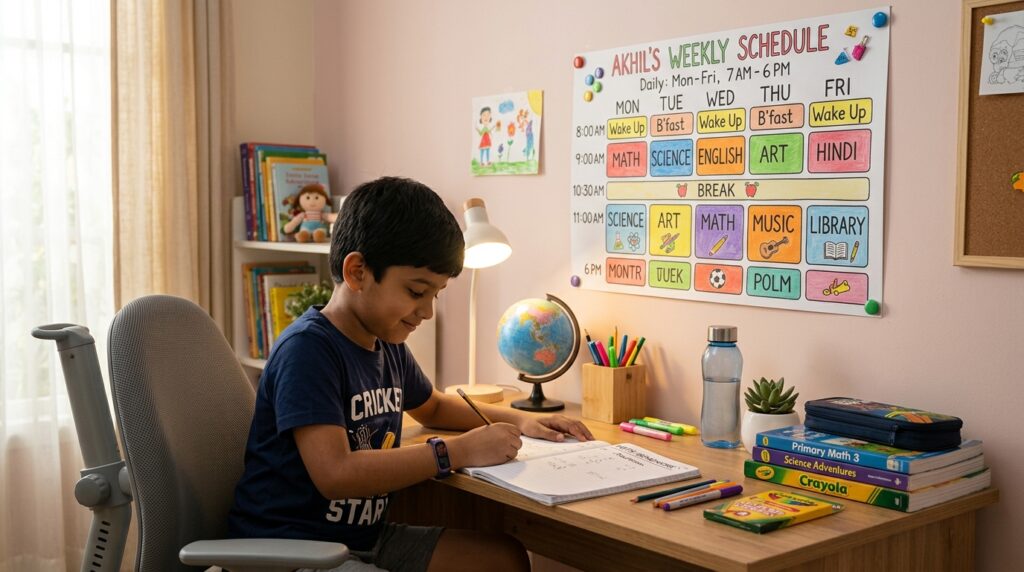
How to treat an ADHD child at home comes down to structure. A fixed daily timetable goes on the wall, homework is split into 15-20 minute blocks with a short movement break, and instructions come one at a time, face to face. The school bag and tiffin have a single place. Praise follows the small win immediately, screens stay out of the hour before bed, and bedtime is fixed because poor sleep multiplies symptoms.
Giving instructions during the child’s favorite cartoon or game is a setup for failure. The parent pauses the activity, makes eye contact and keeps conversations about tasks short. The Royal Children’s Hospital fact sheet on ADHD support at school and home gives the same advice on routines, broken-down homework and praise.
Pause the game, meet the eyes, say one thing. An instruction delivered to the back of a child’s head never arrives.
What not to do with a child with ADHD
What not to do with a child with ADHD matters as much as the routines, because a few common habits make the disorder worse. These are the things most families do without thinking. Children remember the humiliation long after the lesson is forgotten.
- Do not shout long lectures; the child stops hearing after the first sentence.
- Do not punish forgetting or fidgeting that the child cannot control.
- Do not compare the child with a sibling or cousin in front of others.
- Do not take away all play or sport as punishment, because physical activity is part of the treatment.
- Do not keep the diagnosis secret from the class teacher.
These routines work best alongside the professional plan, not instead of it.
Conclusion
Noticing the pattern early is the most useful thing a parent can do. A lasting pattern of inattention, hyperactivity or impulsivity across home and school is worth checking, and it says nothing about the parenting behind it. ADHD is a wiring difference, and children do not choose it.
Early assessment and a combined plan of parent training, school support and, where needed, medicine change how the child does in childhood and into adulthood. The symptoms may not vanish, but the child learns to work with them. The next step is simple: book an appointment with the child’s pediatrician this week, carry the school diary and report cards, and ask for a referral to a child psychiatrist or developmental pediatrician if the pattern fits.
Help in India exists in both government and private settings, and the first phone call is the hardest part.