
Reviewed by IMPS Editorial Team · Last reviewed
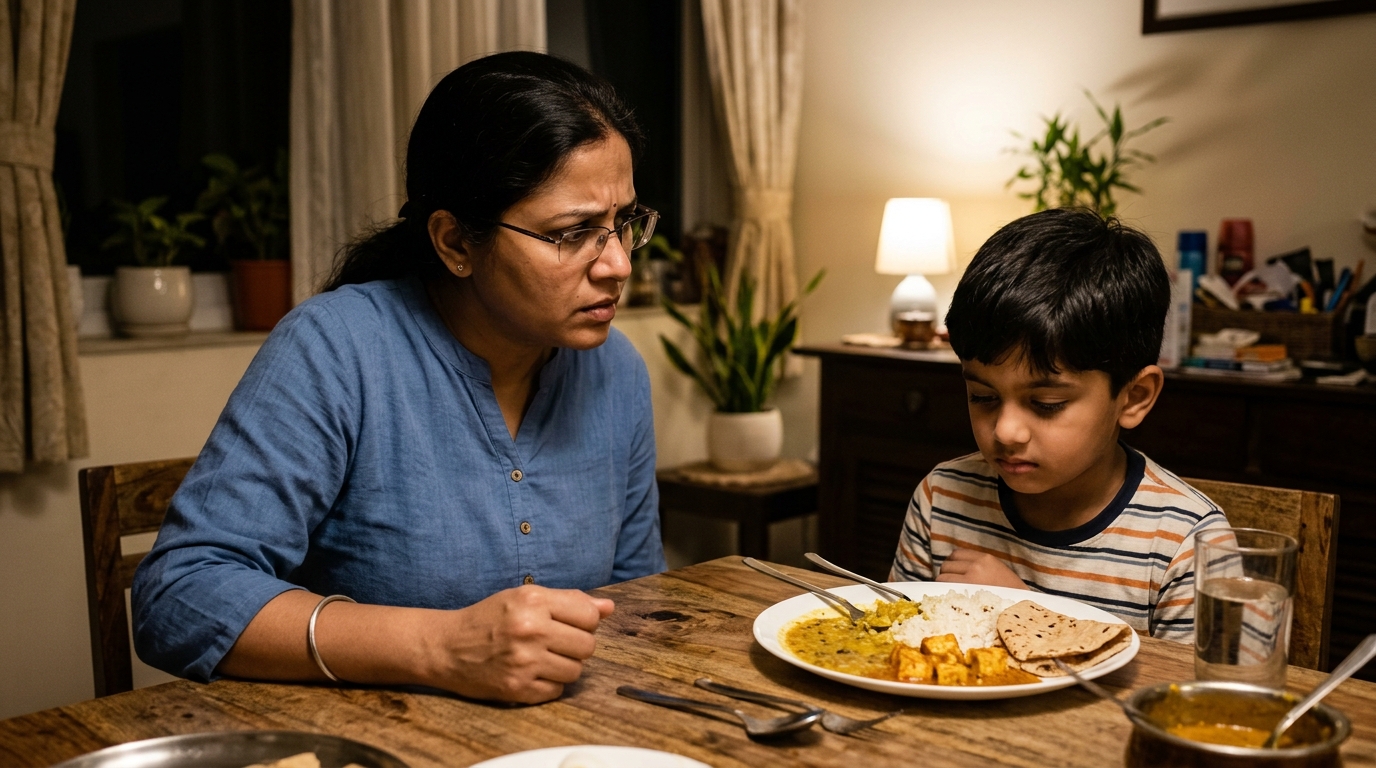
At the dinner table, a mother watches her 9-year-old push rice around the plate and wonders whether a child psychiatrist is the next call. The boy has not eaten his school lunch in three weeks and cries every evening without saying why. Across town, a 15-year-old’s marks have fallen two grades in one term. Both families are asking the same thing: a phase, or something that needs care?
The plain rule of thumb is that a change lasting more than two to four weeks and affecting daily life deserves a professional look. A bad week after an exam or a fight with a friend usually does not. Most families who consult a child psychiatrist in India leave with a plan, not a lifelong label. Emotional and behavioral issues in children respond best when someone looks early, and the path from first worry to booked appointment is shorter than many parents fear.
Mental health, for a family, starts with knowing who to call. The first thing to understand is what this doctor actually does, and how that differs from the school counselor.
Key Takeaways
- A change from the child’s own baseline that lasts two to four weeks and disrupts school, sleep or eating deserves an initial assessment.
- This specialist is a medical doctor who can order tests and prescribe medication; a psychologist tests and gives therapy but does not prescribe.
- Early signs are usually shifts in sleep, appetite, mood, grades and friendships that pile up, not one dramatic event.
- Any talk of dying or self-injury needs same-day help: call Tele-MANAS on 14416 or go to a hospital emergency room.
- Most children get therapy first; medication comes only when a condition is severe or not improving.
- Check training in child and adolescent psychiatry and a team around the doctor before booking; follow-up matters more than a famous name.
- A private initial assessment usually costs about ₹1,000-3,000 in metros, and therapy sessions are the larger cost over a year.
What a Child Psychiatrist Does
A child psychiatrist is a medical doctor trained to diagnose and treat the mind of a person under 18. The role covers behavioral, mental, developmental and emotional health in children, adolescents and their families. Because the training starts with medicine, this doctor can order laboratory and imaging tests and prescribe medication. A teen who is tired and low, for example, may get a thyroid test before anyone talks about depression.
The work begins with an initial assessment. An initial assessment is the structured first visit, usually 45-90 minutes, in which the psychiatrist interviews the parents and the child. The doctor reviews school and medical history and decides whether a diagnosis and a treatment plan are needed. A child psychiatrist is a doctor first, with the authority to rule out physical causes that no counselor can test for.
A child psychiatrist is a doctor first. Blood tests, medical history and medication sit inside the same visit, which a counselor cannot offer.
Treatment plans may involve one-on-one sessions, sessions with parents or teachers, or group therapy. Psychiatrists in this field also perform psychotherapy themselves when needed, though many share that work with a psychologist. Coordination is the other half of the job: these doctors work with the whole family and talk to schools, pediatricians and other specialists. A typical example is a note to a school requesting extra time or a separate room during exams for a child with ADHD.
One exception matters. A pure learning difficulty such as dyslexia, with no emotional or behavioral symptoms, is not a job for this doctor first; a clinical psychologist’s assessment usually comes before any medical visit. Parents often confuse the two professions, and the difference decides which door to knock on.
Psychologist or Psychiatrist: Which One Does a Child Need First
Two children stop sleeping in the same month. One is a 10-year-old who lies awake worrying about a dance competition but eats and plays as usual. The other has stomachaches, has lost two kilograms and no longer wants breakfast. The first may need a counselor; the second needs a doctor, because weight loss always calls for a medical check.
A psychiatrist holds a medical degree and can prescribe medication. A clinical psychologist holds a postgraduate degree in psychology and provides psychological testing and therapy, but does not prescribe. When parents cannot decide, a pediatrician referral or the psychiatrist is the safer first stop. The psychiatrist can refer onward for therapy, while a counselor cannot rule out a medical cause.
| Professional | Training | Can prescribe medication | Best first stop for |
|---|---|---|---|
| Child psychiatrist | MBBS plus MD Psychiatry, often further child training | Yes | Severe mood changes, self-harm risk, suspected ADHD or bipolar disorder, when medication may be needed |
| Clinical psychologist | MA/MSc plus MPhil or PsyD in clinical psychology | No | Psychological testing, IQ and learning assessments, structured therapy for anxiety |
| School or child counselor | Diploma or masters in counseling | No | Exam stress, friendship problems, mild adjustment issues |
| Pediatrician | MBBS plus MD Pediatrics | Yes, within general practice | Ruling out physical causes and giving the first referral |
In India, many hospitals run both specialists under one department, so a child seen by one is routinely sent to the other. The specific mistake is spending months with a school counselor while the child’s sleep, appetite and weight keep changing. Those three signs belong to a doctor, and a weekly talk cannot explain them. Good mental health care for a child usually ends up as a team: psychiatrist, psychologist and school working together.
Before choosing any professional, parents need to know which changes are ordinary growing pains and which are early signs. That line is clearer than most families expect once they know where to look.
Normal Phases Versus Early Signs of Mental Illness in Children
Most parents notice a change many months before they book a consultation, and the waiting, not the noticing, is the problem. The reason is understandable: childhood is full of phases, and nobody wants to label a normal rough patch. The trick is to separate a reaction that passes from a pattern that builds. Time is the best judge, as long as parents set a limit on how long they wait.
Most adjustment reactions settle within four to six weeks with family support; issues that outlast that window or pile up deserve a closer look. Everyday problems, trauma such as the loss of a friend or relative, or a dramatic life change such as divorce can have a deep impact on a child. The mental health children carry through these events depends a lot on how adults around them respond. A doctor becomes necessary when the reaction does not fade.
Changes That Usually Pass on Their Own
Tantrums between ages 2 and 4 are a stage of brain development, not a disorder. A child who turns clingy when a sibling is born is reacting to a real change in attention. A few weeks of moodiness after changing schools, or a dip in grades in the first term of a new board, usually corrects itself. These phases share two features: a clear trigger and a steady, if slow, return to the child’s old self.
Early Signs That Should Not Be Waited Out
Early warning signs look different because they persist and spread into new areas of life. Six of them justify a consultation on their own:
- A change in mood, sleep or appetite that lasts more than two to four weeks.
- A sharp and sudden drop in school performance.
- Withdrawal from friends and activities the child used to love.
- Aggression, vandalism or theft that is new.
- Persistent nightmares or refusal to sleep alone in a child who used to.
- Any talk of death, self-injury or wanting to disappear.
Extreme mood swings, frequent temper tantrums beyond the toddler years, hyperactivity and obvious, persistent disobedience belong on the same watch list. The signal in every case is change from the child’s own baseline, not comparison with other children. A quiet child becoming quieter matters as much as a lively child becoming loud. Parents who compare their son with the neighbor’s son miss this every time.
The early signs of mental illness in children are usually shifts in sleep, appetite, mood, school results and friendships that persist and stack up. One dramatic event is rarely the first clue; disorders announce themselves in small, accumulating changes. The two most common hidden conditions, depression and anxiety, are the clearest examples. Both look different in children than in adults, which is why so many parents miss them.
How Depression and Anxiety Show Up in Children and Teens
A 12-year-old wakes up with a stomachache every school morning, and the family doctor finds nothing wrong. On Sundays, the same child eats a full breakfast and plays cricket until dark. That pattern, pain tied to school days and absent on holidays, is one of the commonest faces of anxiety in children. It is a mental health sign, not a digestive one.
Depression and anxiety in children, adolescents and younger kids rarely look like the adult versions that parents recognize from films. In a child, the first sign of either condition is usually a change in behavior, body complaints or school attendance, not a stated feeling. Psychiatrists who work with young people spend much of the initial assessment translating these behaviors back into emotions. Parents can learn to do a rough version of the same translation at home.
Signs of Depression in Children
The signs of depression in children are often irritability rather than sadness. Frequent headaches or stomachaches with no medical cause, loss of interest in play or hobbies, and sleeping much more or much less are common. Falling grades usually follow within a term. In teens, the picture adds talk of hopelessness or of being a burden to the family.
The specific mistake is reading that irritability as rudeness and punishing it. A 14-year-old who snaps at every question may be depressed, not disrespectful, and a week of grounding makes the disorder worse. Parents who notice that the snapping started around the same time as the sleep change have found the real clue. That timeline is what a child psychiatrist will ask for first.
Signs of Anxiety in Children
The signs of anxiety in children include refusing to go to school, constant reassurance seeking (“will you be there?”), and repeated stomachaches on school mornings. Perfectionism and meltdowns over small mistakes are common, as is difficulty sleeping alone. In teens, the pattern shifts toward avoiding exams, social events or even phone calls. School refusal around the board exam years, classes 10 and 12, is one of the commonest reasons teens in India reach a specialist.
One exception saves families a diagnosis they do not need. Anxiety that appears in only one setting, such as a single tuition class, often points to a situational problem like bullying. The fix is to change the setting first and watch, not to label the child with a disorder. Attention and developmental conditions are a separate group altogether, and they get mistaken for naughtiness or shyness even more often.
ADHD and Autism Spectrum Disorder: Red Flags by Age
A teacher’s note comes home saying a 7-year-old “cannot sit for five minutes”. Some parents read that as a complaint about discipline; an experienced child psychiatrist reads it as a data point. The note matters because it describes behavior in a second setting, outside the home. ADHD and autism spectrum disorder are the two conditions where that kind of outside observation decides the diagnosis.
Both belong to the disorders a child psychiatrist handles directly. ADHD sits among the behavioral disorders, alongside conduct disorder and oppositional defiant disorder, while autism spectrum disorder (ASD) and intellectual disability are developmental disorders within the same scope. Hyperactivity, an inability to concentrate, and constant moving or an inability to sit quietly are consultation triggers in their own right. The age at which they appear tells the doctor which condition to consider.
When Restlessness Is ADHD
ADHD is considered when hyperactivity, impulsivity or inattention appear before age 12, show up in at least two settings such as home and school, and persist for six months or more. All three conditions must hold. A child who is wild at home but focused and calm at school does not meet the rule, and neither does a child whose restlessness began last month. The six-month threshold filters out reactions to a new baby, a house move or a hard teacher.
The specific mistake is diagnosing a bright, bored 6-year-old in a rote-learning classroom as ADHD without a school report. Boredom and attention deficit look identical from the back of a room. A doctor who skips the teacher’s written account is guessing, however experienced. Children with true ADHD struggle to sit still even during activities they enjoy, which is the detail parents can check at home.
Early Features of Autism Spectrum Disorder
Early features of autism spectrum disorder appear in the first two years. Limited eye contact and not responding to name by 12 months, no pointing or sharing interest by 18 months, and few or no words by 24 months are the classic markers. Repetitive movements and strong distress at small changes in routine round out the picture. An experienced child psychiatrist diagnoses ASD from observation and developmental history, not from a blood test or a brain scan.
The when-not-to is just as useful. A late talker who points, plays pretend and seeks cuddles is usually not on the spectrum and may need a hearing test and a speech therapist first. For children who do show the markers, intervention started before age 3 gives the best outcomes, so the first visit should not wait for school. Seen one by one these conditions can feel like separate worlds, and pulling them together shows how common each one is and who treats it.
The Five Most Common Mental Disorders in Children
The five most common mental disorders in children are anxiety disorders, ADHD, depression, behavioral disorders (oppositional defiant and conduct disorder) and autism spectrum disorder. Each one has a typical age of onset and a first sign that parents tend to notice before any professional does. Child psychiatry is built around telling these five apart, because their treatments differ sharply. The same specialist treats all of them, though the lead treatment changes with the condition.
In children, two conditions commonly coexist, such as anxiety with ADHD or depression with a learning difficulty, which is why a full initial assessment matters more than a quick label. A child treated for inattention alone may keep failing because nobody noticed the anxiety underneath. Psychiatrists who see young patients every day screen for the second condition as a matter of routine. Parents can help by describing every change, not just the loudest one.
| Condition | Typical age of onset | What parents usually notice first | Usual lead treatment |
|---|---|---|---|
| Anxiety disorders | 6-12 | School refusal and stomachaches | Therapy first, medication for severe cases |
| ADHD | Before 12 | Restlessness and poor concentration in two settings | Behavior strategies plus medication when impairing |
| Depression | 10-18 | Irritability and withdrawal | Therapy, with medication in moderate to severe cases |
| Behavioral disorders | 6-14 | Defiance and aggression beyond age norms | Parent training and family therapy |
| Autism spectrum disorder | Noticed by 1-3 | Delayed speech and limited social response | Early intervention and behavioral therapy |
Rarer but serious conditions sit within the same specialist’s scope. Bipolar disorder and psychotic disorders such as schizophrenia usually surface in the teen years, and eating disorders including anorexia nervosa, bulimia and binge eating appear in the same age band. Substance use disorders, phobias, panic disorder and OCD complete the list. A doctor trained in children’s mental health recognizes these early, when they are easiest to treat.
The teenage years bring their own cluster of problems and their own branch of the specialty. Adolescent psychiatry deals with a body and a brain changing fast, and with risks a 7-year-old never faces.
Teen Years: When Adolescent Psychiatry Becomes Necessary
A 16-year-old has started skipping dinner and locking the bathroom door for long stretches after meals. Her parents read it as privacy, which teens do want, but the pattern has held for six weeks and her jeans hang loose. That combination, secrecy plus a physical change, is where adolescent psychiatry begins. The specialty covers young people up to 18, and the pace of change in these years is its defining feature.
A teen’s weight change of several kilograms in two months deserves a doctor’s look, whatever the explanation offered. In India, body-image pressure around weight and skin, combined with exam pressure in classes 10-12, is a frequent background to eating issues. Adolescents rarely announce an eating disorder; they hide it, and parents find it through laundry, bathroom habits and missing food. Five triggers call for a child and adolescent psychiatrist without delay:
- Secretive eating, skipped meals, vomiting after meals, or late-night binge eating followed by guilt.
- Cutting or other self-injury, even once.
- Drinking, smoking, vaping or drug use that the teen hides or that affects school.
- Truancy, theft or vandalism that is new.
- Sleep reversed to daytime for weeks, with withdrawal from friends.
The exception is ordinary adolescence. Moodiness, door slamming and wanting privacy are normal and alone do not need a psychiatrist. A child and adolescent psychiatrist will usually see the teen alone for part of the visit, and parents should expect and allow that; teens say things to a doctor they will never say at home. The years between 13 and 18 are also when a few of these situations turn urgent, and an appointment next week is not an answer.
What to Do if a Child Is in a Mental Health Crisis
A child who talks about dying or has hurt themselves needs same-day help, not a booking next week. A threat to harm oneself made in front of others, a suicide attempt, or behavior that may harm the child or others are reasons to reach a child psychiatrist immediately. If a child is experiencing a mental health crisis, a parent should stay with the child, remove means of harm, and call Tele-MANAS on 14416 or go to the nearest hospital emergency department. The treating psychiatrist, if one exists, should hear about it the same day.
Tele-MANAS (14416, also 1-800-891-4416) is India’s free government helpline, open round the clock. The order of steps matters: stay, ask, secure the house, call, and do not leave the child alone that night. A frightened parent at 2 a.m. can follow this list without thinking:
- Stay calm and stay physically with the child.
- Ask directly and gently whether they are thinking of hurting themselves; asking does not plant the idea.
- Remove or lock away medicines and sharp objects, and block access to balconies or terraces.
- Call 14416, dial 112 for emergency services, or go to a hospital emergency room.
- Do not leave the child alone that night.
The specific mistake is taking a suicidal remark as attention seeking or arguing about it. A child who says “I want to disappear” is testing whether anyone will take them seriously, and a dismissal closes the door. In India, a multispecialty hospital with a psychiatry department can admit a child for safety for a few days. Hospitals and networks that provide crisis support and coordinated care then hand the child to a regular team for ongoing care.
A crisis visit is followed by a regular initial assessment within days. Once the child is safe, or when there is no emergency at all, the path for children and their parents runs through a planned first visit. That visit is far less frightening than most families imagine.
What Happens at the First Appointment
A parent walks into the consulting room with a folder of report cards, two teacher notes and a page of dates scribbled the night before. That folder is the most useful thing in the room. The initial assessment usually runs 45-90 minutes, and the doctor spends much of that time building a history of the child, so written records save guesswork. Children and teens forget dates; report cards do not.
A diagnosis is often not given at the first visit; a second visit or a psychologist’s testing may be scheduled before any label or medication is discussed. The visit follows a set order: the child psychiatrist talks to the parents first, then to the child alone for school-age children and teens, then to everyone together. The doctor assesses behavioral, mental, developmental and emotional health, examines the child, reviews reports and orders laboratory or imaging tests when needed. Treatment plans may bring in parents, teachers or other adults in the child’s life.
Parents should bring school report cards from the last two years, any teacher notes, the child’s vaccination and birth records, earlier prescriptions, and a one-page timeline of when the changes started. The questions run wide: pregnancy and birth, milestones, screen time, sleep, and any family history of mental illness. Psychiatrists ask about grandparents and uncles for a reason, since many conditions run in families. None of these questions is a judgment on the parents.
The specific mistake is discussing the child’s problems in detail in front of the child in the waiting room or on the drive there. A child who hears a list of complaints arrives defensive before the doctor has said a word. Parents usually do not need a referral to see a child psychiatrist at a private hospital or clinic in India, while some government institutes route children through a pediatric or general psychiatry OPD first. The visit ends with a treatment plan, and what those plans contain is the question most parents came to ask.
How Child Psychiatrists Treat Children
Most children treated by a child psychiatrist in India get therapy first and medication only when the problem is severe or not improving. The plan depends on age and severity, and for a mild case the question of medicines does not even come up at the first visit. Parents who fear a prescription on day one can relax: that is not how the specialty works. Treatment is a range, not a single switch.
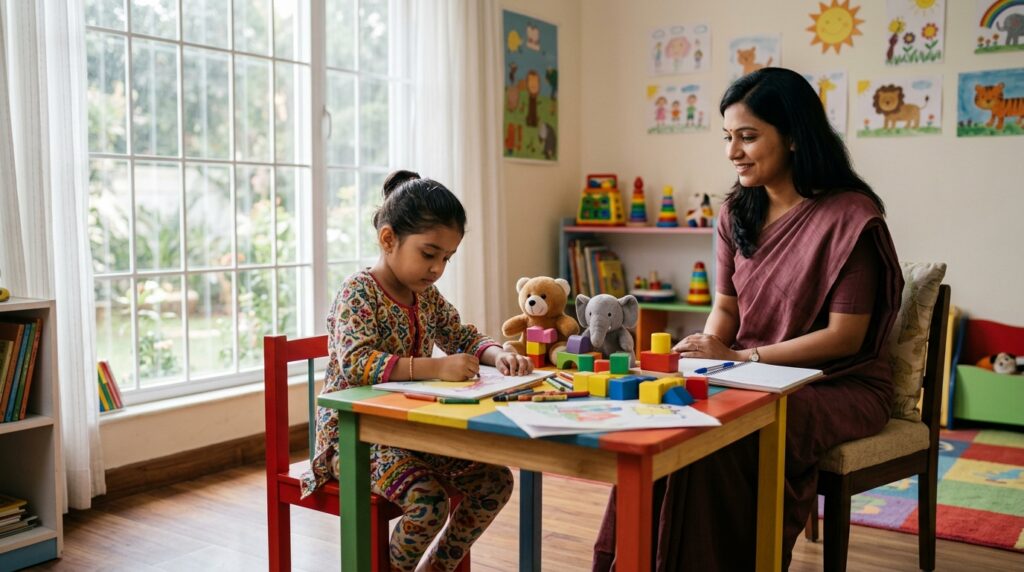
Mild and moderate conditions are usually treated without medication, and no medication decision is made at the first visit for a mild case. Therapy options include cognitive-behavioral therapy (CBT), interpersonal therapy, supportive therapy, parent-child therapy, family therapy, group therapy, crisis intervention and psychoanalytic therapy. Non-drug options such as play therapy, expressive and art therapy, animal-assisted therapy, biofeedback and light therapy widen the choice further. Psychiatrists pick from this menu based on what the child can engage with.
Therapy Options for Different Ages
Children under about 8 are treated mostly through play therapy and parent training, because they cannot talk through feelings the way adults do. School-age children respond to CBT adapted with drawings and games. Teens work through individual CBT or interpersonal therapy, which suits the social worries of that age. Family therapy fits any age when the home is part of the problem.
In India, therapy is usually delivered by a clinical psychologist working alongside the psychiatrist, with the doctor reviewing progress every few weeks. Providers that list services for anxiety, depression, ADHD and eating disorders often describe individualized treatment plans built in the same shared way. Parents should ask who will run the weekly sessions before they begin. The answer shapes both the cost and the fit.
When Medication Is Prescribed
Medication enters the plan when a condition is severe, when it causes real impairment, or when therapy alone has not moved it. The groups below cover most prescriptions in children, with the sign parents should watch for each:
| Medication group | Conditions it is used for | Typical starting point | What parents should watch |
|---|---|---|---|
| Stimulants | ADHD | Usually after behavior strategies fail or impairment is severe | Appetite and sleep |
| Antidepressants | Moderate to severe depression and anxiety in older children and teens | Combined with therapy | Mood changes in the first weeks, with weekly contact with the doctor |
| Mood stabilizers | Bipolar disorder | After a confirmed diagnosis | Regular blood tests |
| Antipsychotics | Psychosis, severe aggression in autism | Low doses | Weight and sleepiness |
| Anti-anxiety medicines | Short-term severe anxiety | Brief courses only | Drowsiness |
The when-not-to that trips up many families is stopping an antidepressant suddenly because the teen “seems fine” after a month. Symptoms often return, and withdrawal effects can be unpleasant. Any reduction must be gradual and planned with the doctor. Health care for the mind follows the same logic as for blood pressure: feeling better is the medicine working, not a reason to drop it.
School and Community Support
Child psychiatrists also work directly with the school. Letters for exam concessions, seating changes and reduced homework during recovery are routine, and teachers usually cooperate once they have a doctor’s note. Community programs, school-based programs and relapse prevention programs give teens a group to recover with. The quality of this whole plan depends on the person writing it, which brings parents to checking a doctor’s training.
Child Psychiatrist India: Qualifications and Training to Check
A psychiatrist in India needs no extra license to treat children, which is why parents must check training themselves. Any doctor with a general psychiatry degree can see a 6-year-old, and some do so with no child-specific training at all. Board or specialty certification is worth checking, because a doctor can practice child psychiatry without it. Parents who type “child psychiatrist India” into a search box get listings that do not sort this out for them.
The best child psychiatrist near me, for any family, is the one with child-specific training, a team around them and a location the family can reach every two to four weeks in the first months. Follow-up matters more than a famous name, because most of the treatment happens in visits two through ten. An expert across the city who can see the child twice a year helps less than a well-trained doctor nearby. Reputation is a starting point, not a decision.
The Training Path in India
The Indian pathway runs MBBS, then MD in Psychiatry (or DNB Psychiatry), then optional superspecialty training. The core training builds on general psychiatry and adds further years focused specifically on children, adolescents and families. Working with families and consulting schools, pediatricians and other agencies on the child’s behalf is part of that training, not an add-on. A psychiatrist who sees children regularly in a children’s hospital setting may have deep experience without the extra degree.
Fellowship in Child and Adolescent Psychiatry in India
A fellowship in child and adolescent psychiatry in India, or the three-year DM in Child and Adolescent Psychiatry offered by a handful of institutes such as NIMHANS in Bengaluru, is the highest formal qualification in the field. Relatively few psychiatrists hold it. Parents should not reject experienced child psychiatrists who lack it, but should prefer one who has it for complex cases such as autism with aggression or early bipolar disorder. For a first episode of school refusal, experience and a good team count for more.
Questions to Ask Before Booking
Five questions to the clinic separate a child-focused practice from a general one:
- What share of the doctor’s patients are under 18?
- Does the doctor work with a clinical psychologist and a speech or occupational therapist in the same team?
- Will the doctor speak to the school if needed?
- How are follow-ups done, in person or online, and how often in the first month?
- What is the plan if medication is suggested and the parents want a second opinion?
The specific mistake is choosing an adult psychiatrist for a 6-year-old because the clinic is nearby, then dropping treatment when the doctor has no play-based approach. A young child who sits through a talking interview learns nothing and dreads the next visit. Experienced child psychiatrists keep toys and drawing paper in the room for a reason. This checklist applies to the places where many Indian families look first, starting with Delhi.
Where Families in Delhi Can Find Child Psychiatry Care
A Delhi parent sits with two options: a dawn queue at a government institute, or a paid appointment at a private hospital the same week. Both lead to qualified doctors, and both have a cost, one in money and one in hours. The best child psychiatrist in Delhi for a given family depends less on reputation than on one structural question. Does the service have a dedicated child and adolescent psychiatry unit with psychologists and therapists under one roof?
For a child who may need admission or repeated blood monitoring, a hospital with a pediatric ward beats a standalone clinic; for weekly therapy, a clinic near home beats a hospital across the city. A child psychiatrist in AIIMS Delhi is reached through the Department of Psychiatry’s child and adolescent services, typically via the hospital’s OPD registration. Government institutes of this kind offer subsidized care with a dedicated academic team, but longer queues and less choice of appointment time. Parents who can take a weekday morning off often find the trade worthwhile.
A child psychiatrist in Ganga Ram Hospital, like psychiatrists at other large private multispecialty hospitals in Delhi, is reached through the psychiatry or pediatrics department. Waits are shorter, pediatric backup for medical tests is in-house, and the fees sit at private levels. Specialists in these settings often share patients with the hospital’s own clinical psychologists, which keeps therapy and medication reviews in one building. The mental health children and adolescents need is easier to protect when nobody has to coordinate three addresses.
Families in the suburbs, and across the rest of India, have further options. Online consultation has changed the map for many of them, and the rule for when it works is simpler than it looks.
Options in Gurgaon, Noida and Online Across India
A Noida family drove two hours each way to Delhi for three visits before finding a team near home. A child psychiatrist in Gurgaon or a child psychiatrist in Noida is usually found in the pediatric or psychiatry departments of the large corporate hospitals and children’s hospital chains that have grown in both cities. That suits NCR families who want to avoid the drive into Delhi for fortnightly follow-ups. Distance is a treatment factor, because a visit skipped is a review missed.
A video initial assessment works for teens, follow-ups, medication reviews and parent guidance anywhere in India; a first assessment for a child under 6 with suspected autism spectrum disorder, or any child in crisis, should be in person. A child psychiatrist at Rainbow Hospital works inside a children’s hospital with pediatric specialists on the same campus. That matters for children whose emotional symptoms travel with medical ones, such as epilepsy or hormone disorders. Rainbow Children’s Hospital runs a team of child psychiatrists who use evidence-based treatments such as cognitive-behavioral therapy.
Private mental health networks now offer online video consultations across India alongside in-person visits at centers in cities such as Bengaluru, Hyderabad and Mysuru. Online sessions let a family in a tier-2 city reach a doctor with superspecialty training that their city may not have. The mental health children receive in Jaipur or Kochi no longer depends on who happens to practice nearby. Families still need a local pediatrician for blood tests and emergencies, and the online doctor will usually ask for one.
Care arranged this way can mix formats: one in-person visit, then video follow-ups. The final practical question is what all this costs, and the answer is less about the doctor’s fee than most families assume.
What a Child Psychiatrist Consultation Costs in India
The consultation fee is usually the smallest part of a year of care; therapy sessions are the larger line. A private child psychiatrist’s initial assessment in India usually runs about ₹1,000-3,000 in metro hospitals and clinics. Senior consultants in top corporate hospitals charge more, and smaller cities charge less. Follow-ups typically cost about half to two-thirds of the first fee, which is why the number of follow-ups shapes the budget.
Therapy sessions with a clinical psychologist are billed separately, usually weekly at first, and psychological testing for IQ or autism is a one-time extra cost. Government institutes charge a nominal registration fee for the doctor and often for testing too. Private mental health networks in Indian metros list initial assessments from about ₹1,000, with online consultations at the same rate. Online appointments in those networks are typically available within 2-5 days.
| Setting | Initial assessment (typical) | Follow-up (typical) | Waiting time (typical) |
|---|---|---|---|
| Government institute | Nominal registration fee | Nominal | Weeks, with early-morning queues |
| Private multispecialty hospital | About ₹1,500-3,000 | About ₹800-2,000 | Days to two weeks |
| Standalone private clinic or network | From about ₹1,000 | About ₹700-1,500 | 2-5 days online |
| Online consultation | Same as the clinic’s in-person rate in most cases | Same | 2-5 days |
Four things move the total: the city, the doctor’s seniority, whether testing is needed, and how many months of follow-up the condition requires. Psychiatrists treating ADHD or ASD will see a child over years, while an anxiety episode may close in a season. The specific mistake is budgeting only for the doctor’s fee and dropping therapy after two sessions because it was unplanned. Mental health care works like physiotherapy: the treatment is the course, not the consultation.
Whatever the plan costs, most of the daily work happens at home. Health, for a child, is built between appointments as much as inside them.
How Parents Can Support a Child’s Mental Health at Home
One father replaced the nightly “how was school” interrogation with a walk around the block, and his 11-year-old started talking within a week. To help mental health in children, parents should keep routines steady, listen without fixing, name feelings, protect sleep and keep the school in the loop. None of this requires training, only consistency. The mental health children build at home is the ground that treatment stands on.
These practices support treatment but never replace it when warning signs persist, and a child on medication still needs the doctor’s follow-up even when home life has improved. Families often relax the moment a child smiles again, and that is the moment a missed review does the most damage. Six home practices make a measurable difference:
Home practices support treatment; they never replace it while warning signs persist. A child on medication still needs the doctor even when home feels calm.
- A fixed sleep time with screens off an hour before bed: 9-11 hours for school-age children, 8-10 for teens.
- Ten minutes of one-on-one time a day with no phone and no advice.
- Naming the feeling (“you look worried”) instead of judging the behavior.
- Daily outdoor play or sport.
- One family meal a day where grades and marks are not discussed.
- Telling the class teacher what is going on, so the child is not punished for symptoms.
The specific mistake is cutting all screen time abruptly as punishment. For a teen, the phone is social contact, and removing it at the moment they feel lowest cuts the one lifeline friends provide. Limits on hours work; a total ban backfires. Care at home, given this way, makes acting early far less daunting than it once seemed.
Conclusion
No parent regrets a visit that turned out to be unnecessary. A change from the child’s own baseline that lasts more than a few weeks and affects school, sleep, eating or friendships is reason enough for an initial assessment. Seeing a child psychiatrist early usually means a shorter, lighter course of care, because small problems need small fixes. Families who wait a year often need twice the treatment.
The concrete next step fits into one evening. Parents can write a one-page timeline of the changes tonight and book an initial assessment, in person or online, with a doctor whose training is in child and adolescent psychiatry. If anything feels urgent before that date, 14416 answers at any hour. Children recover well when adults act, and psychiatrists in this field see that recovery every week.
Mental health care sought early is a strength, not a label.